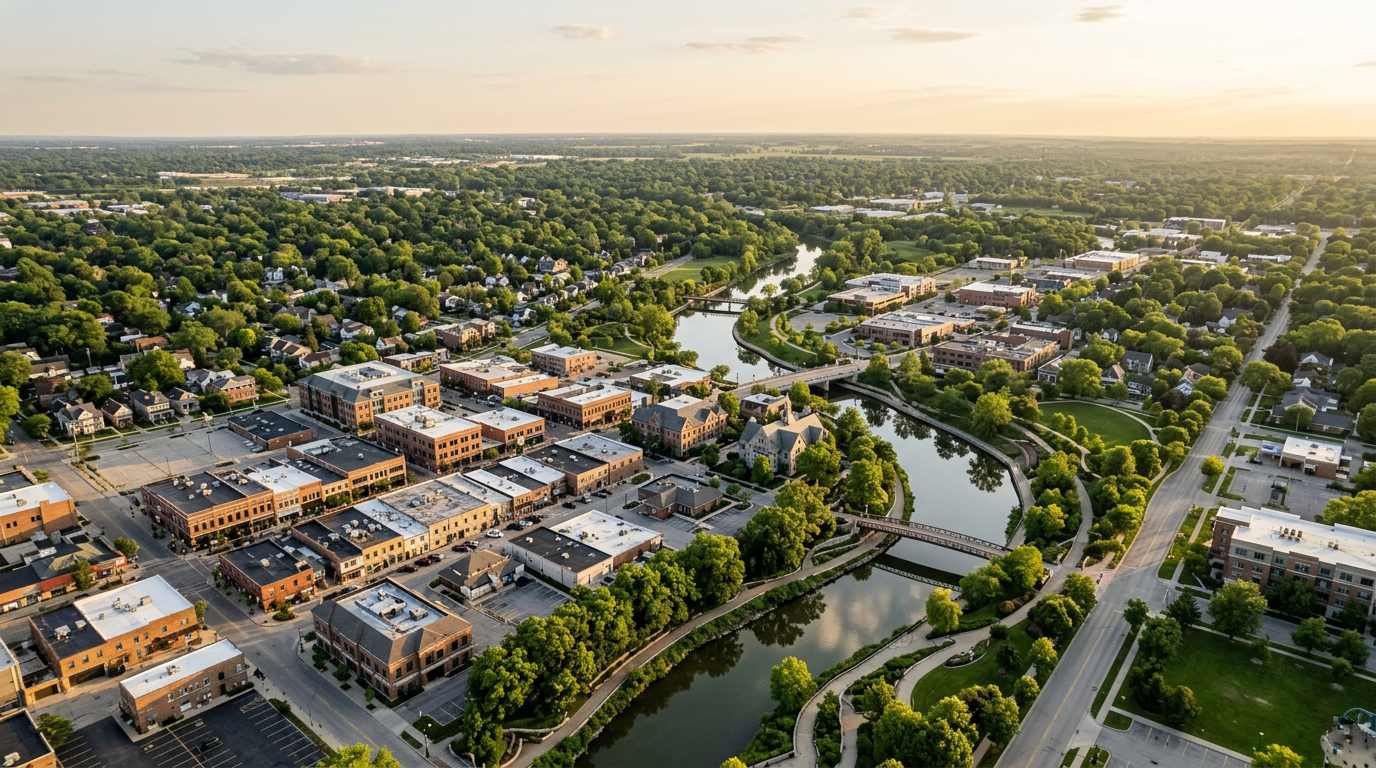
Naperville sits in DuPage and Will counties, roughly thirty miles west of Chicago, where the Chicago suburbs meet the open land of the Illinois prairie. The DuPage River winds through town, and its banks give the city a green, walkable spine that shapes much of daily life. Downtown, with its brick storefronts, restaurants, and a riverside path, feels distinctly different from the leafy established neighborhoods surrounding it, where mature trees line streets of brick colonials and mid-century homes. Farther out, newer subdivisions bring larger floor plans, community amenities, and a more suburban rhythm.
Daily life here is easy to settle into. Residents browse local shops downtown, find dining ranging from casual to special-occasion, and fill their calendars with community events and live performances. Parks and trails are woven throughout, and a commuter rail line gives many people a direct route into Chicago. The economy is broad, with corporate offices, technology, healthcare, and education all contributing. Schools are a central part of the community's identity, including neighborhood elementary schools like Owen Elementary, with child care options such as South Naperville KinderCare close by.
Naperville suits families looking for strong community ties, commuters who want city access with a suburban home, and professionals or downsizers who appreciate a walkable downtown.
As a Naperville agent working downtown each week, I view the 2025 B4 Downtown Core zoning amendment as a signal that future proposals involving banks may be evaluated differently within the core. Its practical effect will depend on the amendment’s detailed standards and how individual parcels are zoned, but it could influence redevelopment options, the mix of downtown uses, and the balance between services, housing, and walkable activity near the Riverwalk. Buyers and developers should review the current ordinance before assuming a property’s future potential.